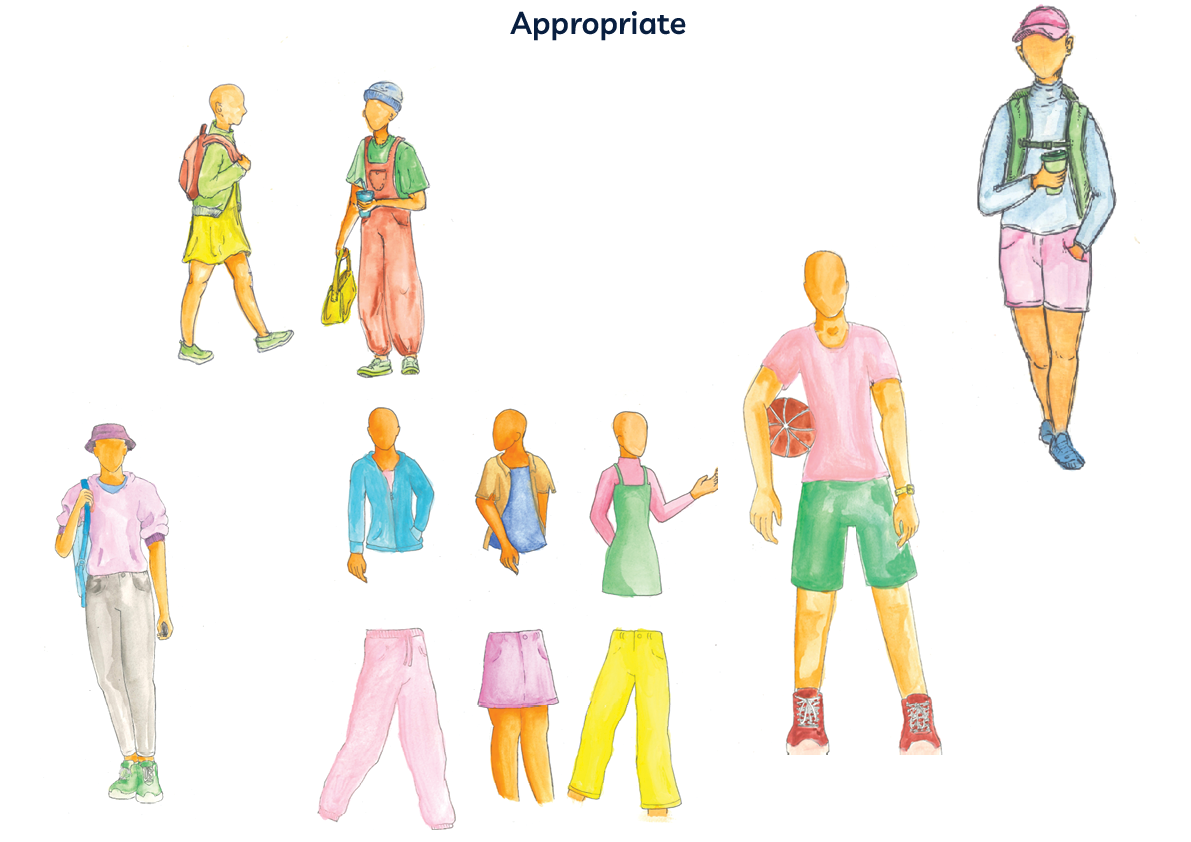
Indooroopilly State High School is a non-uniform school with student dress standard approved by our Parents and Citizens' Association. The policy provides a framework for an acceptable standard of dress that promotes a quality learning environment for students and staff and the good image of the school in the community. In developing the Dress Standard Policy for Students, consideration has been given to:
- Our school values
- Queensland Health Sun Safe policy
- Workplace Health and Safety considerations
Students choosing to attend this school and enjoy its non-uniform dress standard accept that it is the Executive Principal's responsibility to ensure that clothing meets appropriate standards in line with our school values, specifically, Each person's dignity, Our community's diversity and Quality Learning.
Non-compliance with the dress standard will be considered a failure to comply with school procedures and consequences will result. It is important to note that these same standards also apply when travelling to and from school, during exam blocks, incursions and excursions, during school related weekend activities or special events, and when temporarily visiting the school for any reason.
Exceptions to some of the dress requirements below will occur in various sporting activities where team uniforms or standards are involved and in some practical lessons, such as for particular activities in Performing Arts or HPE.
Dress Requirements:
1. Shirts/Tops/Jumpers/Dresses
a) Shirts, tops, jumpers and dresses must always cover the front, back
and sides of the student, not restricting the normal course of normal movement throughout the day.
c) Torn, transparent or ripped garments, or garments with visible holes in the fabric, are not acceptable. Frayed hems are acceptable.
2. Shorts/Skirts/Pants/Jeans/Dresses
a) Skirts, shorts and dresses must be long enough to allow adequate coverage to at least mid-thigh length when standing for all the movements required in a school day, inclusive of all curriculum and non-curriculum activities. Skirts, shorts, pants, jeans and dresses must not be torn or have visible holes in the fabric.
b) Tights, leggings and lycra pants/shorts with opaque coverage to at least mid-thigh length, when standing, are acceptable.
c) Undergarments (including bra straps) beneath shorts, skirts, pants, jeans or dresses should never be visible. Athletic shorts, leggings, stockings or tights can be visible with adequate coverage to at least mid-thigh length when standing.
d) Torn or ripped garments, including tights or stockings, are not acceptable. Frayed hems are acceptable.
a) Enclosed footwear with a covered heel and toe must be worn (at all times), including during practical classes (e.g. PE, Science, ITD). 'Ugg' style boots/slippers, 'Crocs' style shoes are not permitted.
b) In practical classes, teachers will designate a safety standard required for footwear to reflect the potential risk of a particular activity or location.
c) Students with foot injuries are not automatically exempt from wearing enclosed footwear. Parents are required to contact the Head of Year to discuss appropriate footwear in these instances.
a) Students may wear their preferred headwear, such as hats, caps, beanies, bandanas and hoods at all times (except during class, during exams or at assemblies). Exceptions are made for class, exams and assemblies where the headwear can be demonstrated to be part of medical, sensory, religious or cultural practice.
b) Hats must be worn when in the sun, particularly when participating in HPE and sport activities.
a) Earrings identified as a health and safety risk (such as large hoops or dangly earrings) are not permitted. Simple studs and sleepers/starters in the ear are permitted.
b) Visible facial piercings, other than one small nose stud or sleeper/starter, are not permitted.
c) Accessories such as restrictive or inappropriate pointy or sharp necklaces, chains or other forms of jewellery (including studded collars) are not permitted.
d) Rings that affect a student's ability to write or use other equipment must not be worn.
e) Teachers of practical subjects may require students to remove any accessories and jewellery for that class to maintain compliance with workplace health and safety standards.
f) Make-up, if worn, must be applied in a manner that does not obscure the identity of the student and must not include offensive or inappropriate words, symbols, or images.
g) A studded or sharp item made from metal or other materials affixed to belts, jewellery or accessories are not permissible as they pose a workplace health and safety risk.
6. Sport and Practical Activities
a) Students are permitted to wear lycra pants or shorts (to mid-thigh length when standing) when participating in practical physical activities.
b) Hats and sunscreen must be worn at all times when participating in HPE or sport activities.
c) In practical classes, long hair must be tied back to comply with workplace health and safety requirements.